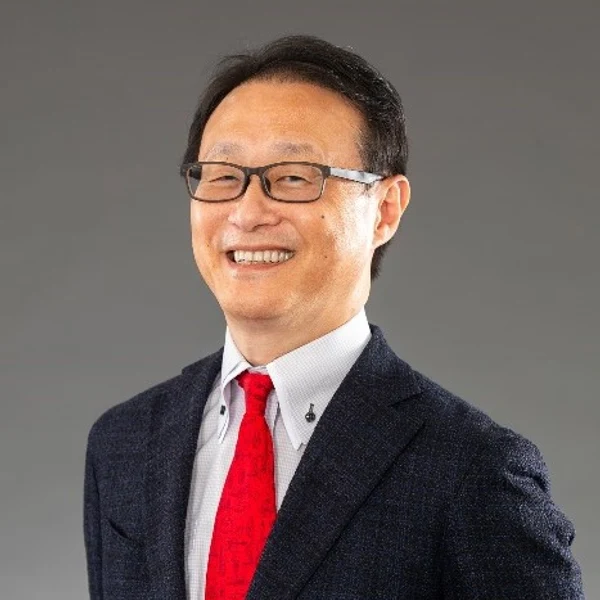
Shingo Ashizawa is President of Kanda University of International Studies in Chiba, Japan. His research involves foreign credential evaluation, micro-credentials, and the comparative study of the National Qualifications Framework. Currently, Prof. Ashizawa is leading a joint-research project supported by the Japanese government agency, JSPS (Japan Society for the Promotion of Science). The project focuses on foreign credential evaluation and the comparative study of the National Qualifications Framework. Prof. Ashizawa is the head of the conference committee of SIIEJ (Summer Institute in International Education, Japan) which attracts more than 300 international educators all over Japan and overseas.
His publications include “Convergence or Fragmentation? Recent developments in recognition of micro-credentials and their impact on higher education in Asia and the Pacific,” Journal of International Cooperation in Education (Emerald, 2024), “Student and Skilled Labour Mobility in the Asia Pacific Region: Reflecting the Emerging Fourth Industrial Revolution” (Palgrave Macmillan, 2023), and others.
He serves as an advisor for MEXT on UNESCO’s Tokyo Recognition Convention Committee, as well as a referee for a number of JSPS grants related to the internationalization of Japanese universities. Prof. Ashizawa served as Deputy Secretary General for UMAP (University Mobility in Asia and the Pacific) from 2016 until 2020. He teaches a number of courses related to cross-cultural communication and global entrepreneurship.
Shingo Ashizawa received the Fulbright scholarship twice and studied at the Harvard Graduate School of Education (1995). He has also conducted joint research at the East-West Center of the University of Hawaii. His past professional experience includes positions at the Council on International Educational Exchange (CIEE), Keio University, Osaka University, Meiji University, Toyo University and Kansai University of International Studies.
A Skills-First Approach and the Use of Micro-Credentials in Asia and the Pacific — The Impact on Students and Skilled Labor Mobility
While traditional hiring processes rely on formal qualifications or prior job experience, many countries and organizations are adopting the Skills-First Approach, which prioritizes skills over credentials and has the potential to “expand access to job opportunities, foster a more agile workforce, and strengthen economic resilience” (OECD 2026). This trend can be seen in initiatives such as Skills England in the UK, SkillsFuture in Singapore, and Jobs and Skills Australia.
This session introduces recent trends in the Skills-First Approach. The presenter will illustrate how micro-credentials benefit a Skills-First Approach over traditional macro-credentials. As a micro-credential is a record of learning outcomes based on a specific and small volume of learning, it can help students and skilled labor move across borders more easily. The session also covers recent efforts to establish micro-credential guidelines and frameworks in Japan and across Asia and the Pacific. The audience will be invited to discuss how universities can adopt a Skills-First Approach through the effective use of micro-credentials.