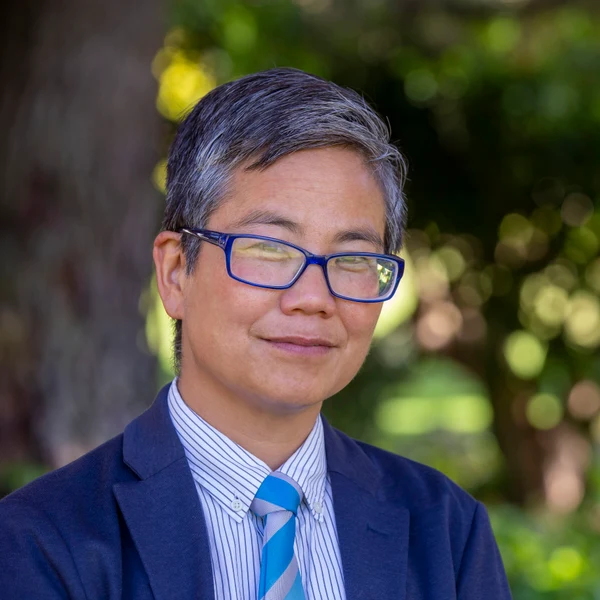
Amy Sueyoshi is Provost and Vice President of Academic Affairs at San Francisco State University. She is a historian by training with an undergraduate degree from Barnard College of Columbia University and a Ph.D. from University of California at Los Angeles. Her research area lies at the intersection of Asian American Studies and Queer Studies. She has authored two books Queer Compulsions: Race, Nation, and Sexuality in the Affairs of Yone Noguchi and Discriminating Sex: White Leisure and the Making of the American “Oriental.”
Her essay “Breathing Fire: Remembering Asian Pacific American Activism in Queer History” was a part of the award-winning National Park Service LGBTQ Theme Study published in 2017. She will be publishing a third book by the same title in December 2026 with University of Washington Press. Amy is also a founding co-curator of the GLBT History Museum and seeded the intergenerational Dragon Fruit Oral History Project at API Equality Northern California. She is the recipient of numerous awards including San Francisco Pride Community Grand Marshal and the Phoenix Award for her service to the Asian and Pacific Islander queer women and transgender community.
Education for All: Global Exchange as Increasing College Access
Studies show that going to college advances not just individual social mobility but also broader societal health. While a baccalaureate degree boosts a graduate’s earnings over a lifetime and creates financial stability, it also reduces a person’s reliance on social services and likelihood to be incarcerated. College degrees also improve mental well-being and community engagement. Despite the benefits of college, there are populations for whom higher education is not accessible due to structural barriers, particularly in a society with rigid educational pathways. Even as college-going Americans tend to value prestigious institutions over those less prestigious, how do more accessible institutions have greater impact on society and what role does global exchange play in these institutions?