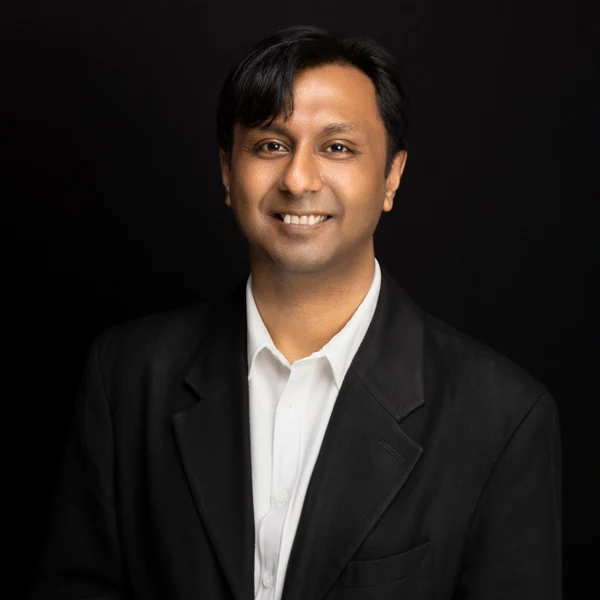
Tariq A. Mir
Professor of History, School of Humanities and Social Sciences, Taejae University
Dr Tariq A. Mir is a scholar of intellectual and cultural history in the Islamic world, based in Seoul. He is currently Professor of History in the School of Humanities and Social Sciences at Taejae University, where he develops and teaches courses in Global History and Global Philosophy. He has taught at universities across the UK, Europe, and East Asia, and has also taught at the secondary level at Eton College.
He received his BA and MPhil in Theology and Philosophy from the University of Cambridge and completed his PhD in History at SOAS University of London in 2024. His doctoral research examined post-Avicennan Islamic philosophical theology in the Islamic East after the Mongol conquests.
His recent work explores how philosophical and theological knowledge was transmitted, transformed, and taught across premodern Eurasia. His broader interests include Mongol-era global connectivity, Silk Roads historiography, museums as spaces of cultural and historical storytelling, material culture, and spatial narratives as ways of presenting global intellectual history beyond textual sources.
In Praise of Difficult Questions: Restlessness, Travel, and Learning to Learn
This talk approaches future education from the perspective of a mediaevalist. At first, this may seem unexpected in a forum shaped by AI, technology, and innovation. Yet many of Taejae’s most compelling educational principles have deep historical roots. In premodern scholarly cultures, education was shaped by mobility, encounter, debate, and the search for teachers. Students and scholars travelled not simply to collect information, but to be formed by new contexts, difficult questions, and intellectual exchange.
Drawing on this longer history, the talk connects scholarly mobility to Taejae’s Global Engagement Tour and to inquiry-based teaching in the classroom. It argues that education has never been only about content delivery. It is also about cultivating the values and dispositions that make learning possible: curiosity, restlessness, humility, courage, judgement, and openness to transformation. Taejae’s model is future-facing precisely because it recovers this older educational insight: that education forms people through mobility, encounter, difficult questions, and the courage to keep learning.